Best Free Word Processor: 5 Options Compared

The best free word processor for most people is Google Docs because it makes writing, editing, sharing, and collaborating on documents straightforward. If you need a powerful desktop application that works offline without a subscription, LibreOffice Writer is an excellent alternative. Microsoft Word for the web is another strong choice if you prefer Word's familiar interface.
The right choice depends on how you work. Some tools are better for collaborative writing, while others offer more control over document formatting, local files, and long reports.
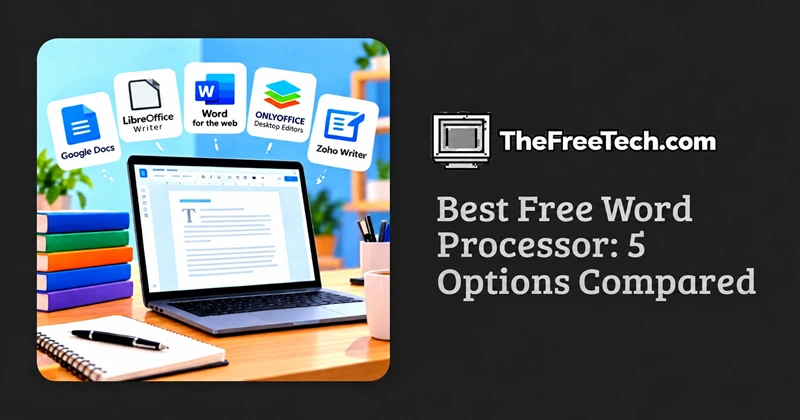
The 5 Best Free Word Processors
| Word processor | Best for | Main advantage |
|---|---|---|
| Google Docs | Everyday writing and teamwork | Easy online collaboration |
| LibreOffice Writer | Offline writing and advanced documents | Full-featured desktop editor |
| Microsoft Word for the web | Existing Word users | Familiar Word interface |
| ONLYOFFICE Desktop Editors | Microsoft Office file compatibility | Desktop editing with DOCX support |
| Zoho Writer | Browser-based business writing | Online document creation and collaboration |
1. Google Docs — Best overall
Google Docs is the best starting point for people who want to create documents without installing desktop software.
You can write essays, prepare reports, draft business letters, format resumes, and share documents with other people. Changes are saved automatically when you're online, and you can configure supported files for offline use. Offline access requires setup and is not automatically available in every situation.
Best features
Automatic saving and cloud storage.
Sharing, comments, and collaborative editing.
Browser access and mobile apps.
Microsoft Word file support.
Optional offline editing for eligible files.
Limitations
Google Docs is primarily designed around cloud-based work. Its interface and page-layout controls may not suit every complex publishing workflow, and offline editing requires preparation.
Best for: Students, remote teams, freelancers, and anyone who regularly shares documents.
Get started: https://docs.google.com/
Official reference: Google Docs help explains creating, saving, and managing documents.
2. LibreOffice Writer — Best free desktop word processor
LibreOffice Writer is a strong option if you want a full-featured word processor installed on your computer rather than a service that depends on the cloud.
It supports everything from simple letters to lengthy academic documents, including styles, tables, indexes, tables of contents, and mail merge. It can open and save Microsoft Word formats and export documents to PDF.
Best features
Free and open-source software.
Desktop editing without a constant internet connection.
Extensive formatting and page-layout controls.
Support for DOC and DOCX files.
PDF export and tools for long documents.
Limitations
You need to install the application, and documents with complex Word-specific formatting may not look exactly the same when opened in another program. Its interface may also feel less familiar to users accustomed to recent versions of Microsoft Word.
Best for: Offline writers, students preparing long reports, and people who want a capable word processor without recurring fees.
Get started: https://www.libreoffice.org/download/
Official reference: LibreOffice Writer.
3. Microsoft Word for the web — Best for Word users
Microsoft Word for the web provides a browser-based way to create, edit, and share documents using a free Microsoft account.
It is worth considering if you already exchange Word documents with colleagues, clients, or classmates. The online application includes core writing and formatting tools, along with document sharing and review features.
Best features
Familiar Word interface.
Browser-based document editing.
Text formatting, tables, images, and page-layout controls.
Document sharing and comments.
Basic spelling and grammar assistance.
Limitations
The web version does not provide every feature available in the paid desktop edition. If you rely on specialized formatting, advanced automation, or desktop-only functionality, check that the online version supports your workflow before switching.
Best for: Microsoft Word users who want to edit documents online without buying the desktop application.
Get started: https://www.microsoft365.com/
Official reference: Get to know Word for the web.
4. ONLYOFFICE Desktop Editors — Best for Microsoft Office file compatibility
ONLYOFFICE Desktop Editors is another free desktop option for users who frequently work with DOCX documents.
It supports common office formats and provides editing tools for text documents, spreadsheets, and presentations. The desktop application can work with files stored locally without requiring a constant internet connection.
Best features
Desktop editing on Windows, macOS, and Linux.
Support for DOCX, ODT, and other common formats.
Formatting tools for structured documents.
A tabbed interface for working with multiple files.
Additional editors for spreadsheets and presentations.
Limitations
Although it supports popular Microsoft Office formats, compatibility does not guarantee identical rendering in every document. Some collaborative and connected features may require online services.
Best for: People who prefer desktop software and frequently exchange documents with Microsoft Office users.
Get started: https://www.onlyoffice.com/desktop.aspx
Official reference: ONLYOFFICE Desktop Editors guide.
5. Zoho Writer — Best for online business documents
Zoho Writer is a browser-based word processor worth considering for business writing and collaborative document workflows.
It can be a useful alternative if you want to draft, format, and share documents online instead of maintaining a local desktop application.
Best features
Online document editing.
Document formatting and templates.
Sharing and collaboration tools.
Integration with other Zoho productivity services.
Limitations
Its free-plan allowances and availability of specific features should be checked against your intended workflow. Some business capabilities may depend on the associated Zoho service or plan.
Best for: Freelancers, small teams, and users who want a web-based business writing tool.
Get started: https://www.zoho.com/writer/
Which Free Word Processor Should You Choose
The fastest way to decide is to start with your most important requirement.
For everyday writing: Choose Google Docs.
For working without internet access: Choose LibreOffice Writer.
For a familiar Microsoft Word experience: Choose Word for the web.
For editing DOCX files on your computer: Consider ONLYOFFICE Desktop Editors.
For online business documents: Consider Zoho Writer.
Free word processors: What matters most?
Before choosing, consider these three factors.
1. Offline access
If your internet connection is unreliable, a desktop application such as LibreOffice Writer is the simplest choice. Google Docs also supports offline editing, but you must enable the feature and prepare eligible documents beforehand.
2. Microsoft Word compatibility
If you regularly receive DOCX files, test a representative document in your chosen application. Pay particular attention to page breaks, tables, headers, footnotes, and fonts. Small formatting differences can matter in academic submissions and professional reports.
3. Long or complex documents
For a thesis, technical report, or lengthy manuscript, prioritize styles, automatic tables of contents, page numbering, cross-references, and export options. LibreOffice Writer offers a substantial set of tools for these tasks.
FAQ
What is the best completely free word processor?
Google Docs is a good choice for everyday online writing, while LibreOffice Writer is a strong option for a full-featured desktop word processor. Both can be used without purchasing a standard paid subscription.
Is there a free alternative to Microsoft Word?
Yes. Google Docs, LibreOffice Writer, and ONLYOFFICE Desktop Editors are three alternatives. Microsoft Word for the web also provides free online editing with a Microsoft account.
Can I use a free word processor offline?
Yes. Desktop applications such as LibreOffice Writer and ONLYOFFICE Desktop Editors can edit local documents without a constant internet connection. Google Docs also supports offline work when configured appropriately.
Which free word processor is best for students?
Google Docs is convenient for assignments that need to be shared or reviewed by classmates and instructors. LibreOffice Writer may be preferable for students who work offline or need more extensive tools for long academic documents.
Can free word processors open Microsoft Word files?
Yes. Google Docs, LibreOffice Writer, Microsoft Word for the web, and ONLYOFFICE support Microsoft Word documents. However, complicated layouts and specialized formatting may not transfer perfectly between applications.
Do I need to pay for Microsoft Word?
Not necessarily. If the browser-based version meets your needs, you can use Word for the web for free. A paid Microsoft 365 plan may be necessary for particular premium features or the full desktop application.