Champ Man 26/27 Review: Classic Championship Manager Returns

Champ Man 26/27 brings the classic Championship Manager 97/98 experience into the modern football era, replacing its original player database with current clubs, players, and managers. The result is an unofficial, not-for-profit fan project that lets football management fans revisit a simpler style of management without purchasing a new game or installing traditional PC software.
Its biggest attraction is the combination of familiar old-school management and contemporary football data. Instead of chasing graphical improvements, the project focuses on squad building, scouting, transfers, tactics, and match commentary. It also introduces adjustments such as five substitutions and updated financial values.
For players who miss the straightforward appeal of classic Championship Manager, this is an intriguing way to revisit the genre. However, its older foundations and browser-based format mean it is not a direct replacement for a modern, feature-heavy football management simulator.
What Is Champ Man 26/27
Champ Man 26/27 is a fan-made update of the classic Championship Manager 97/98, redesigned around the 2026/27 football season. The project retains the original game's management approach while replacing its historical football database with contemporary players, clubs, and managers.
The developer's original inspiration was a return to playing the classic game and the idea of recreating that experience with modern football personnel. The project subsequently evolved into a browser-based version that players can access online.
The game is available through its official website, with options to launch the full game or a quick season. The website also provides screenshots, a database explorer, FAQs, and save-management controls.
Importantly, this is an unofficial fan project rather than an official release from the owners of the Championship Manager brand.
Classic Gameplay With Modern Football Squads
The central appeal of Champ Man 26/27 is its commitment to an older style of football management.
Modern management games can surround players with extensive tactical systems, detailed analytics, staff responsibilities, and numerous administrative tasks. That depth can be rewarding, but it can also make the experience feel complicated when all you want to do is build a competitive team and win matches.
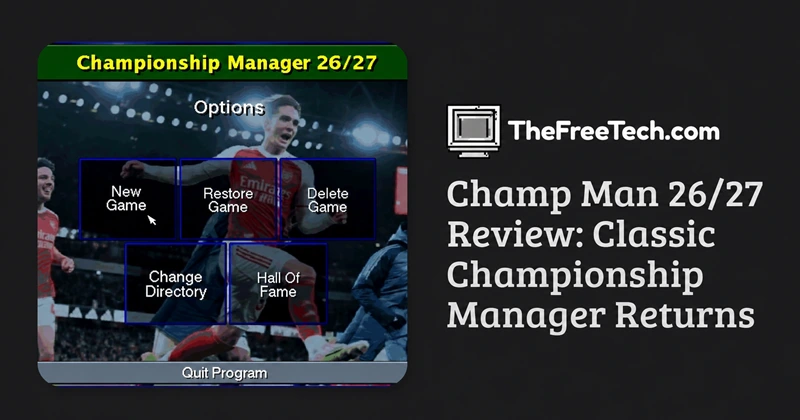
Champ Man 26/27 takes a different approach. Its classic interface, text-based match commentary, and attacking balance indicators keep the focus on the decisions that shape a football season.
Imagine starting a career with a struggling club. Your priorities are straightforward: assess the squad, identify weaknesses, search for affordable signings, establish a workable formation, and try to improve results. The satisfaction comes from making better football decisions rather than navigating increasingly elaborate management systems.
This is the game's strongest selling point for nostalgic players. The interface may look dated compared with modern releases, but that simplicity is central to the experience rather than an attempt to imitate contemporary graphics.
Current Players Change the Experience
The updated database gives the familiar management framework a new purpose. Instead of relying on the players remembered from the late 1990s, managers can work with contemporary footballers and clubs.
That creates a useful contrast between familiar mechanics and modern squad-building decisions. Players who follow today's football can approach the game with existing knowledge of current teams, promising youngsters, established stars, and potential transfer targets.
The project also extends beyond the leagues associated with the original release, including Saudi Arabia, Major League Soccer, and Brazil. Player statistics are based on real-world data and have been refined as part of the database-building process.
However, a modern database does not automatically make the game as sophisticated as a modern simulation. The appeal is the combination of updated football information and older management mechanics.
What Has Changed From Championship Manager 97/98?
Champ Man 26/27 preserves the original game's foundations while making several adjustments to accommodate contemporary football.
| Feature | What it means for players |
|---|---|
| 2026/27 squads | Manage contemporary players, clubs, and managers. |
| Updated finances | Player values, wages, and club finances are adjusted for the modern era. |
| Five substitutions | More flexibility when responding to match situations. |
| Broader international coverage | Additional footballing environments, including Saudi Arabia, MLS, and Brazil. |
| Browser-based access | Launch the game through its website rather than a conventional installation. |
| Save-file controls | Download and restore save files through the available interface. |
These changes help the game feel relevant without abandoning the older formula. Five substitutions, in particular, make the match-management options more compatible with modern football.
Financial adjustments are also important because simply replacing old players with current ones would not be enough to create a convincing contemporary management experience. Wages and transfer values need to fit the modern football economy, even within the constraints of an older game.
The result is best understood as a modern database built around a classic game, not a complete redesign of its underlying systems.
The First-Hand Perspective: What Makes It Appealing
The most interesting aspect of Champ Man 26/27 is the kind of experience it promises: less emphasis on presentation and more emphasis on the decisions that make football management addictive.
Consider the familiar challenge of taking a smaller club up the divisions. A limited budget forces you to prioritise recruitment. A weak defence may require a different formation, while an inconsistent striker can turn a promising season into a frustrating one. Every transfer and tactical adjustment becomes part of a longer-term plan.
That is the sort of scenario in which a classic management game can be compelling. The attraction is not necessarily seeing a beautifully animated match. It is wanting to advance to the next fixture, check the league table, discover whether a signing has worked, and find out whether your latest tactical decision will save your job.
For someone returning to Championship Manager, the updated database adds a fresh layer to that familiar appeal. For a newcomer, it offers an opportunity to explore the genre without first learning the many systems found in more complicated games.
Editorial transparency: This review has not independently tested a full career or completed matches in the game. These observations describe the appeal of its documented mechanics and the likely experience for its intended audience; they are not claims of personal gameplay results.
Playing Champ Man 26/27 in Your Browser
Accessibility is another important part of the game's appeal. The official website offers a direct route into the full game, alongside a quick-season option for players who want a shorter experience.
Before starting, it is worth understanding how the browser version works.
Use a desktop or laptop: The published instructions recommend a computer with a keyboard and mouse. Mobile phones and tablets are reported as unsupported.
Allow time for initial loading: Starting a new game with the full database may take several minutes.
Be careful with saved games: Progress is stored in the browser environment, so changing computers or clearing browser data can affect access to a career.
Keep a backup: The interface provides a Download Save option, allowing players to export their saves and restore them later.
Understand the multiplayer limitation: Although the game runs online, it does not offer internet multiplayer matches. Multiple managers can take turns on the same computer.
These details matter because browser-based access is convenient only when players understand where their progress is stored. Downloading a backup is a sensible precaution before clearing browser data or moving to another device.
The project also has known legacy issues, including inconsistencies in historical records and certain competition scheduling behaviour. Players should therefore approach it as an enthusiast-driven adaptation rather than a fully modernised commercial release.
What Could Be Better
Champ Man 26/27 has a clear identity, but that identity comes with limitations.
The interface is old-fashioned. Players who expect contemporary graphics, elaborate match presentation, or a polished modern user interface may find the experience dated. The classic presentation is part of the appeal, but it will not suit everyone.
The underlying systems remain rooted in an older game. Updated squads and finances improve relevance, but they do not transform the original management engine into a completely new simulation.
Some technical quirks remain. Legacy calendar behaviour, historical records, and competition-related issues have been reported. These may be minor inconveniences for nostalgic players, but they are worth knowing about before committing to a long career.
Browser saves require care. Keeping progress in the browser makes access straightforward, but players should not assume that their career will automatically follow them between devices or survive the removal of local browser data.
Long-term play has a limit. The reported career timeline ends in 2055, after approximately 29 seasons, so players planning an exceptionally long managerial journey should be aware of that restriction.
None of these limitations necessarily undermines the project's central idea. They simply clarify that this is a nostalgic fan project, not a replacement for every feature found in today's leading football management games.
Who Should Play Champ Man 26/27
Champ Man 26/27 is particularly suitable for three groups of players.
Long-time Championship Manager fans will appreciate the return to the classic interface and familiar management approach, especially with modern players replacing the original database.
Casual football management fans may enjoy a simpler alternative to games that require considerable time learning their systems and navigating their interfaces.
Players interested in football gaming history can explore how a classic management framework feels when paired with contemporary squads and adjusted financial values.
On the other hand, players who prioritise detailed tactical analysis, advanced club infrastructure, sophisticated match visuals, or online multiplayer should look carefully at the game's limitations before making it their primary management simulator.