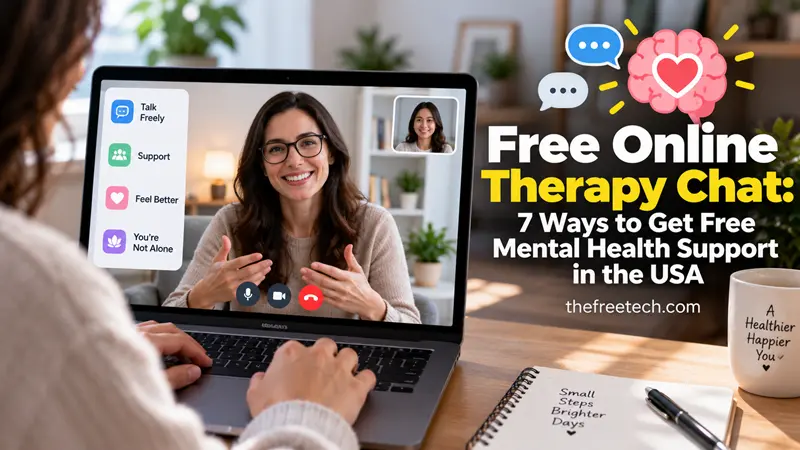
Free Online Therapy Chat: 7 Ways to Get Free Mental Health Support in the USA

If you're looking for free online therapy chat in the USA, several organizations provide free mental health conversations, emotional support, and crisis counseling without requiring health insurance or upfront payment.
Some of the most accessible options include the 988 Suicide & Crisis Lifeline, Crisis Text Line, and SAMHSA's treatment locator. Depending on your needs, you may also qualify for free or reduced-cost counseling through community health centers, university training clinics, and nonprofit organizations.
One important distinction: free mental health chat isn't always the same as professional therapy. Some services connect you with trained crisis counselors or volunteers, while others provide access to licensed mental health professionals.
Here's where to start and how to find the right support.
7 Places to Find Free Online Therapy Chat in the USA
The following organizations offer different types of mental health support. Some are designed for immediate emotional assistance, while others can help you find ongoing treatment.
1. 988 Suicide & Crisis Lifeline – Free Online Chat 24/7
Best for: Emotional distress, anxiety, depression, suicidal thoughts, and immediate mental health support.
The 988 Suicide & Crisis Lifeline provides free, confidential support throughout the United States.
You don't have to be suicidal to contact 988. You can reach out if you're experiencing emotional distress, loneliness, relationship problems, substance-related concerns, or other difficult situations.
Available options:
Online chat through https://988lifeline.org/
Call 988
Text 988
What makes it useful:
Available 24 hours a day, seven days a week.
No insurance or payment information is required.
Conversations are confidential.
Spanish-language support is available.
Trained crisis counselors provide emotional support and referrals.
The service is designed for immediate crisis support rather than ongoing psychotherapy.
2. Crisis Text Line – Free Mental Health Chat by Text
Best for: People who prefer texting instead of speaking on the phone.
Crisis Text Line is a nonprofit organization offering free, confidential mental health support through text messaging and online chat.
You can connect with a trained volunteer Crisis Counselor when you're feeling overwhelmed, anxious, lonely, or emotionally distressed.
How to access it:
Text HOME to 741741.
Follow the automated instructions.
Wait to connect with a live Crisis Counselor.
Explain what's happening at your own pace.
The service is available 24/7 in English and Spanish.
Counselors are trained volunteers, not medical professionals or licensed therapists. Their role is to provide emotional support and help you work through a difficult moment.
3. SAMHSA – Find Free or Low-Cost Mental Health Treatment
Best for: People looking for ongoing professional counseling or treatment options.
The Substance Abuse and Mental Health Services Administration (SAMHSA) is a federal agency that helps Americans find mental health and substance use treatment resources.
Its treatment locator, FindTreatment.gov, helps you search for treatment providers and facilities across the country.
You can use it to explore:
Mental health treatment facilities.
Behavioral health services.
Substance use treatment.
Providers offering different payment arrangements.
Treatment resources in your area.
SAMHSA also provides information about affordable treatment for people without insurance.
Some providers offer sliding-scale fees, meaning the amount you pay depends on your income.
This is a particularly useful option if you need more than a one-time emotional support conversation.
4. Community Health Centers – Affordable Mental Health Counseling
Best for: People without insurance or those who cannot afford private therapy.
Community health centers provide healthcare services to people regardless of their insurance status.
Many offer behavioral health and mental health services, with fees adjusted according to income.
The Health Resources and Services Administration (HRSA) provides an online directory to help you find nearby facilities.
Visit: https://findahealthcenter.hrsa.gov/
Depending on the location, available services may include:
Mental health assessments.
Individual counseling.
Behavioral health treatment.
Referrals to mental health specialists.
Support for people experiencing emotional difficulties.
Not every health center offers online therapy chat, and services and costs vary by location. Contact the center directly to ask about telehealth appointments and financial assistance.
5. NAMI – Free Mental Health Information and Peer Support
Best for: People who want guidance, mental health information, and support from people with relevant lived experience.
The National Alliance on Mental Illness (NAMI) is a nonprofit organization dedicated to mental health education, advocacy, and support.
Its NAMI HelpLine offers free information, guidance, and resource referrals for people experiencing mental health challenges, their families, and caregivers.
You can explore:
Mental health education.
Peer support resources.
Local support groups.
Information about treatment options.
Guidance for finding appropriate mental health services.
NAMI is not a replacement for professional therapy or emergency crisis care. Its resources can, however, help you identify your next steps.
6. University Psychology Training Clinics – Low-Cost Professional Therapy
Best for: People looking for structured counseling at a reduced cost.
Many universities with psychology, counseling, or clinical training programs operate training clinics.
These clinics allow graduate students to provide supervised counseling as part of their professional education.
Depending on the university, services may include:
Individual therapy.
Relationship counseling.
Family counseling.
Psychological assessments.
Online counseling appointments.
Some clinics offer free sessions, while others charge reduced fees based on income.
Search for university psychology training clinics in your state and ask whether they provide teletherapy.
Before booking, confirm whether sessions are supervised by licensed professionals and whether the service is available to people outside the university community.
7. Employer and College Mental Health Programs
Best for: Employees and students who already have access to healthcare or educational support benefits.
You may already qualify for free counseling without realizing it.
Many employers offer an Employee Assistance Program (EAP), which can provide a limited number of confidential counseling sessions at no cost to eligible employees.
Colleges and universities may also provide free counseling through student health or counseling centers.
Check with:
Your company's HR department.
Your employee benefits provider.
Your university counseling center.
Your student health services office.
Ask whether virtual appointments or online counseling are available.
These programs can be especially useful if you want professional support without paying out of pocket.
Free Online Therapy Chat vs. Professional Online Counseling
Before choosing a service, understand what kind of help you're receiving.
Not every website that offers free mental health conversations provides clinical therapy.
| Type of service | What you can expect |
|---|---|
| Professional online therapy | Structured treatment with a licensed mental health professional |
| Online counseling | Guidance and support from a qualified counselor |
| Crisis chat | Immediate support from trained crisis counselors |
| Peer support | Conversations with people who have relevant lived experience |
| Emotional support chat | A supportive conversation with someone trained to listen |
If you need help managing ongoing depression, anxiety, trauma, or other mental health concerns, professional treatment may be more appropriate than a one-time support chat.
Can You Get Free Online Therapy Without Insurance
Yes. Not having health insurance doesn't mean you cannot access mental health services.
Here are several options to investigate:
1. Community health centers
Many federally supported health centers offer services with income-based fees.
2. University counseling clinics
Some universities provide free or reduced-cost sessions through supervised training programs.
3. Nonprofit organizations
Mental health nonprofits may provide peer support, referrals, educational resources, and other free services.
4. State and local mental health programs
Your state or county may offer publicly funded behavioral health services.
5. Sliding-scale therapists
Some private therapists adjust their fees according to your income.
You can also visit SAMHSA's free and low-cost treatment guide to explore additional options.
What Can You Discuss During a Free Mental Health Chat
You don't need a formal mental health diagnosis to ask for emotional support.
Here are some common reasons people seek online mental health conversations.
Anxiety and Constant Overthinking
If you constantly worry about work, relationships, finances, or the future, talking with someone may help you organize your thoughts and identify possible next steps.
Depression and Loneliness
Persistent sadness, isolation, lack of motivation, and feelings of hopelessness can make everyday life difficult.
A support service can provide a starting point for discussing what you're experiencing and finding further care.
Relationship and Family Problems
Breakups, divorce, family disagreements, and communication problems can create significant emotional stress.
A counselor may help you explore your feelings and consider healthier ways to approach difficult situations.
Work Stress and Burnout
Work pressure, job insecurity, financial responsibilities, and exhaustion can affect emotional well-being.
You can discuss these concerns with a support counselor or mental health professional.
Grief and Major Life Changes
Losing someone, experiencing a major transition, or facing unexpected challenges can leave you feeling overwhelmed.
Mental health support can help you navigate these experiences.
How to Start a Free Online Therapy Chat
Starting a conversation with a mental health professional or support counselor can feel intimidating, especially if you've never used an online service.
Here is a simple process.
Step 1: Choose the right service
Decide whether you need immediate emotional support, professional counseling, or ongoing therapy.
Step 2: Check eligibility and availability
Some services are nationwide, while others depend on your state, age, insurance, or employment status.
Step 3: Understand the privacy policy
Review how the platform handles your messages, personal information, and conversation records.
Step 4: Start with a simple message
You don't need to explain your entire situation immediately.
For example:
"I'm having a difficult time emotionally, and I've been feeling overwhelmed lately. I'd like someone to talk to about what's happening."
Or:
"I've been experiencing anxiety and overthinking, and I'm not sure how to manage it. Can you help me understand what support is available?"
Step 5: Ask about further assistance
If you need continued help, ask whether the service can refer you to a licensed therapist, psychologist, or affordable counseling program.
Is Free Online Therapy Chat Safe and Confidential
Many established mental health organizations take privacy seriously, but confidentiality policies differ between services.
Before using a platform, consider these precautions:
Choose established organizations with identifiable contact information.
Read the privacy policy before sharing sensitive details.
Check whether conversations are stored or reviewed.
Verify the qualifications of anyone providing professional therapy.
Avoid sharing passwords, Social Security numbers, banking information, or unnecessary identifying documents.
Understand when information may be disclosed to protect someone's safety or comply with the law.
Remember: Confidential does not always mean anonymous. A service may have access to your phone number, email address, or other identifying information.
If a website promises completely anonymous professional therapy without explaining its privacy practices, investigate before using it.
FAQ
Is there a completely free online therapy chat in the USA?
Yes. The 988 Lifeline and Crisis Text Line provide free, confidential mental health support. Other organizations and community programs offer free or income-based counseling, although availability and eligibility vary.
Can I chat with a licensed therapist for free?
Sometimes. University training clinics, nonprofit programs, community health centers, and certain employer or college programs may provide free access to professional counseling. However, many free chat services use trained volunteers or crisis counselors rather than licensed therapists.
Can I get free online therapy without health insurance?
Yes. You can explore community health centers, nonprofit programs, university clinics, and publicly funded mental health services. SAMHSA's treatment resources can help you find options.
Is free online therapy available 24/7?
Some mental health support services operate around the clock. The 988 Lifeline and Crisis Text Line are available 24/7. Traditional counseling and therapy appointments usually require scheduling.
Can I talk to someone anonymously about my mental health?
Some support services allow you to begin a conversation without providing your full identity. However, anonymity policies differ. Review the provider's privacy policy before sharing personal information.
Is online therapy as effective as in-person therapy?
Online therapy can be an appropriate treatment option for many people, depending on their needs, the provider, and the type of treatment. It is not suitable for every situation, so discuss the available options with a qualified mental health professional.
What should I do if I need immediate mental health support?
If you're experiencing emotional distress or a mental health crisis in the United States, call or text 988 or start a conversation through https://988lifeline.org/.
If you or someone else is in immediate physical danger or experiencing a life-threatening medical emergency, call 911 or go to the nearest emergency department.