Free Online Virtual Browser: What It Is and How to Choose One

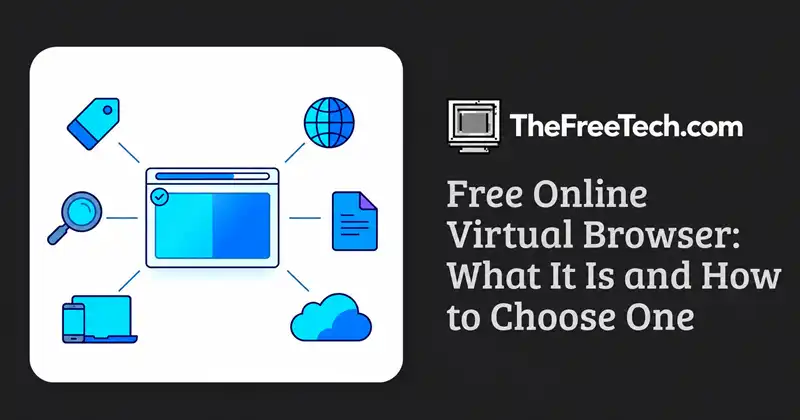
A free online virtual browser lets you use a web browser through a remote environment instead of relying entirely on the browser running on your own computer. You open the service online, start a browser session, and interact with websites through that remote environment.
This can be useful when you need a temporary browser session, want to separate browsing activity from your main computer, or need access to a browser environment without installing additional software.
The main thing to keep in mind is that “free” doesn’t necessarily mean unlimited. Free services may restrict session time, available browsers, computing resources, storage, or the number of sessions you can run.
In my personal experience using one of the virtual browser service, the free tier has some limitations. It allows you to run virtual session with registration, select browser type, browser language, keyboard language, however it limits location, custom proxy, and the virtual browsing session only comes in low resolution, which potentially leads to incovenince for longer session.
How Does a Virtual Browser Work
With a conventional browser, websites are loaded and processed primarily on your own device.
With a virtual browser, the browser runs in a remote environment. Your device acts as the interface through which you control that session.
A simplified workflow looks like this:
Your device → online virtual browser service → remote browser → website
The remote environment handles the browser session while you interact with it through the internet.
This setup can be useful when you want a browser environment that is separate from your everyday desktop.
What Can You Use a Free Online Virtual Browser for
A virtual browser can be useful for several tasks, including:
Temporary browsing: Use a browser session without setting up another local browser environment.
Testing websites: Check how a site behaves in a different browser environment.
Isolated browsing: Keep a particular browsing session separate from your normal browser profile.
Access from another device: Use a browser environment from a computer that has limited software installed.
Development and testing: Developers may use remote browser environments to test websites or web applications.
Short-term tasks: Run a browser session when installing or configuring a full virtual machine would be unnecessary.
The right use depends on what the service actually provides. A lightweight browser session is very different from a complete remote computer.
Virtual Browser vs. Normal Browser vs. Remote Desktop
These terms are sometimes used interchangeably, but they describe different setups.
| Option | Where the browser runs | Best suited to |
|---|---|---|
| Normal browser | Your own device | Everyday browsing |
| Virtual browser | A remote environment | Temporary or isolated browser sessions |
| Virtual machine | A remote or local virtual computer | Running an entire operating system |
| Remote desktop | A remote computer you control | Using a broader desktop environment |
If you only need a browser, a virtual browser can be simpler than accessing a complete remote desktop.
If you need applications beyond the browser, files, system settings, or a full operating system, a remote desktop or virtual machine may be more appropriate.
What Should You Check in a Free Online Virtual Browser
Before choosing a service, check the restrictions rather than looking only at the word “free.”
1. Session limits
Find out whether sessions automatically expire and whether there is a daily or monthly usage allowance.
A service may be free but unsuitable for long-running tasks if sessions are limited to short periods.
2. Browser options
Check which browsers and browser versions are available.
If you need a specific browser for compatibility testing, this can be more important than the amount of free usage.
3. Performance
Remote browsers depend on both the service's resources and your internet connection.
Look for information about available CPU, memory, graphics acceleration, and expected responsiveness if the service provides those details.
4. File access
If you need to upload or download files, check whether the service permits it.
Some virtual browser environments deliberately restrict interaction with the local device.
5. Persistence
Determine whether your browser session is temporary or persistent.
A temporary environment may erase cookies, downloads, settings, and other session data when you leave.
6. Privacy
Understand what information the provider can potentially process.
For sensitive activity, review the provider's privacy policy, data-retention practices, logging policies, and security documentation before using the service.
7. Website compatibility
A remote browser may not behave exactly like a browser running directly on your computer.
Check whether the service supports JavaScript-heavy websites, authentication flows, downloads, extensions, multimedia, and other functionality you actually need.
Common Limitations of Free Online Virtual Browsers
Free access usually comes with trade-offs.
You may encounter:
Short session durations
Usage quotas
Queues before a session starts
Limited computing resources
Fewer browser choices
Restricted downloads or uploads
No persistent storage
Disabled browser extensions
Lower performance during busy periods
Features reserved for paid plans
These restrictions do not necessarily make a free online virtual browser unsuitable. They simply mean you should match the service to the task.
For occasional browsing or short testing sessions, limited resources may be perfectly adequate. For continuous automated testing or resource-intensive work, a free tier may not provide enough capacity.
Is a Free Online Virtual Browser Secure
A virtual browser should not automatically be treated as anonymous or completely private simply because the browser runs remotely.
Your connection to the service and the activity inside the remote environment can involve the service provider's infrastructure. Depending on how the platform operates, the provider may have visibility into certain technical information or session data.
For sensitive browsing:
Read the provider's privacy and security documentation.
Understand whether sessions are logged or retained.
Avoid entering sensitive credentials into an unfamiliar service.
Check whether uploaded files are stored.
Use services with clear security policies and a trustworthy operating history.
A remote browser can provide separation from your local machine, but separation is not the same thing as anonymity.
When is a Free Online Virtual Browser Enough
A free option can make sense when you need:
Occasional browser access
Short testing sessions
A temporary environment
Basic website compatibility checks
A quick browser session without installing software
You may need a paid or more capable solution when you require:
Long-running sessions
Consistent high performance
Persistent browser profiles
Large amounts of storage
Advanced automation
Multiple concurrent browser sessions
Specialized testing environments
The best choice depends less on whether a service is labeled “free” and more on whether its limits match your actual workload.
Frequently Asked Questions
What is a free online virtual browser?
It is a browser environment that runs remotely and can be accessed through the internet, with a free usage option. The exact features and restrictions vary by provider.
Can I use a virtual browser without installing software?
Often, yes. Many browser-based virtual environments are accessed through an ordinary web browser. However, the exact access method depends on the service.
Is a virtual browser the same as a VPN?
No. A virtual browser provides a remote browser environment, while a VPN primarily routes network traffic through a VPN server. They solve different problems.
Is a virtual browser the same as a virtual machine?
No. A virtual machine can provide an entire virtual computer or operating system. A virtual browser is generally focused on providing a browser environment.
Are free online virtual browsers unlimited?
Usually, you should not assume that. Free plans can impose restrictions on session length, usage, resources, browser choices, storage, or other features.
Can I use a free online virtual browser for sensitive information?
Use caution. Before entering confidential information, review the provider's security and privacy policies and understand what data the service may retain or process.