How to Create Your Own Online Radio Station Free

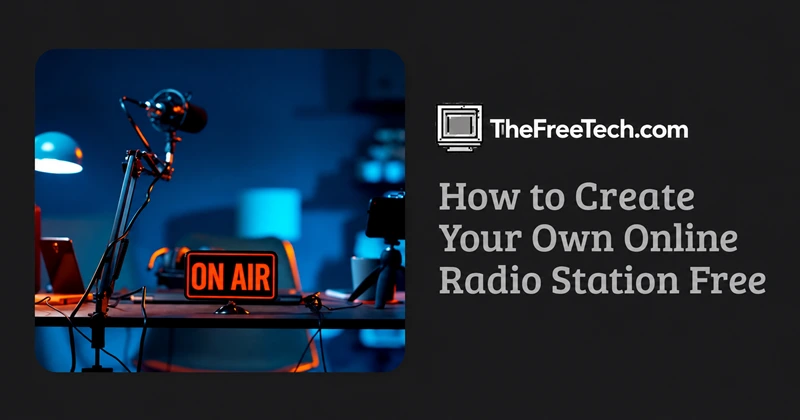
Yes, you can create an online radio station without paying for radio-hosting software or renting a streaming server. The easiest approach is to use a free hosted radio service: create your station, connect your microphone or audio software, add your content, and share the station's player link.
The main thing to understand is that free radio hosting and free music licensing are two different things. A hosting provider may let you stream for free while you remain responsible for having the rights to broadcast the music you play.
Choose the Right Free Setup
There are three practical ways to start.
| Setup | Best for | Technical difficulty | 24/7 automation |
|---|---|---|---|
| Browser-based station | Beginners who want to go live | Very low | Depends on provider |
| Free hosted Icecast station | DJs and hobby stations | Low | Depends on provider |
| Self-hosted AzuraCast | People who want maximum control | Higher | Yes, with suitable server setup |
For the simplest start, use a hosted service. For example, GoCast currently offers a free station that can broadcast directly from a browser and provides a shareable player page. Its free station continues playing while the browser is open.
Caster.fm is another current option. Its free plan provides an Icecast streaming server, a radio website, and up to 400 listener slots at up to 96 Kbps. Its free plan does not include AutoDJ, so your station needs to remain connected to your broadcasting setup.
If you are comfortable with Linux and server administration, AzuraCast is free and open-source and can provide playlists, live DJs, a web-based DJ, public station pages, and other radio-management features. However, it is self-hosted, so “free software” does not necessarily mean zero operating cost.
What You Need
For a basic station, you can start with:
A computer or compatible mobile setup
A stable internet connection
A microphone if you plan to talk live
Audio files you have permission to broadcast
A free radio-hosting account
Broadcasting software if your chosen service requires it
You do not need a professional studio to begin. A laptop, decent internet connection, and basic microphone can be enough for a simple online station.
Create Your Free Station
Choose a free hosted service and create an account.
During setup, you will normally choose:
Station name
Station description
Genre
Logo or artwork
Time zone
Stream settings
Choose a name that listeners can easily remember and spell. Your station name will often appear on the public player and in stream metadata.
Decide What Your Station Will Broadcast
Before going live, decide whether you want to run:
A live talk or DJ station:
You speak into your microphone and broadcast in real time.
A music station:
You send music from your computer to the streaming server.
A scheduled station:
Shows or playlists play according to a timetable.
A 24/7 automated station:
Preloaded content continues playing when you are not broadcasting.
The last option is where free services can differ significantly. Some free plans support live broadcasting but don't include automated playback. Caster.fm, for example, says AutoDJ is available on its Pro plan rather than its Free plan.
Connect Your Audio
If your service supports browser broadcasting, the process can be extremely simple: allow microphone access, select your audio source, and start broadcasting.
With a traditional Icecast setup, you may instead use broadcasting software such as a compatible DJ or encoder application. Caster.fm lists compatibility with broadcasting tools including BUTT, Mixxx, SAM, Virtual DJ, and Ladiocast.
Before inviting listeners, make a private test. Check:
Microphone volume
Music volume
Background noise
Audio quality
Whether the stream starts correctly
Whether the public player works
Add Your Station's Personality
A radio station needs more than a stream URL.
Create a simple identity with:
Station name
Logo
Short station description
Genre
Presenter or DJ names
Regular show times
Social-media links
Contact information
You can also create short station IDs such as:
“You're listening to [Station Name].”
Keep IDs short so they do not interrupt the listening experience.
Make Your Station Available to Listeners
Most hosted services give you a public player or station page.
Copy the public listening link and place it wherever potential listeners can find it:
Your website
Social profiles
YouTube descriptions
Community pages
Email newsletters
QR codes
Online directories
A simple landing page only needs to answer three questions:
What is this station?
What does it play?
How do I listen?
Check Music Licensing Before Broadcasting
This is the part new station owners most often overlook.
Being allowed to upload or stream a song privately does not automatically give you permission to publicly broadcast it. The licensing requirements depend on your country, the music you use, and how you distribute it.
Your hosting provider may not obtain those rights for you. Caster.fm, for example, explicitly says music licensing is the broadcaster's responsibility and that requirements vary by country.
If you want to avoid complicated music-rights issues, consider programming:
Your own recordings
Music you have permission to broadcast
Public-domain material where applicable
Properly licensed production music
Independent artists who have granted you streaming rights
Do not assume that labeling a station “non-commercial” automatically makes copyrighted music free to broadcast.
How to Make It Run 24/7
A live station does not necessarily equal a 24/7 station.
If your free service requires your browser or broadcasting computer to remain connected, the station may stop when that connection ends. GoCast's current free offering, for example, states that the station plays while the browser is open.
For continuous automated broadcasting, you need a service or setup that supports AutoDJ or scheduled playback.
One option is self-hosted AzuraCast. It supports playlists and scheduled playback and can run a station continuously when installed on suitable server infrastructure.
The trade-off is technical complexity: AzuraCast itself is free, but you still need somewhere to run it.
A Simple Free-start Workflow
If you're a complete beginner, use this sequence:
Choose a station concept.
Example: independent music, community news, talk shows, electronic music, or a hobby DJ station.Choose a free hosting option.
Start with a browser-based service if you want the fewest technical steps.Create your station.
Add your branding.
Station name, artwork, description, and genre.Prepare legal audio content.
Connect your microphone or broadcasting software.
Run a private test.
Start broadcasting.
Open the public player on another device to make sure listeners can hear it.
Share the listening link.
You can then improve the station gradually instead of paying for equipment or infrastructure before you know whether you will use it.
Common mistakes to avoid
Paying for equipment too early
You can start with basic equipment. Upgrade the microphone or mixer only after you know what your station actually needs.
Confusing a podcast with a live station
A podcast distributes recorded episodes. An online radio station can provide a continuous stream, scheduled shows, or live broadcasting.
Assuming free hosting means free music
It doesn't. Check the rights associated with every category of music you intend to broadcast.
Choosing a complicated setup unnecessarily
Self-hosting gives you more control, but beginners may not need it. AzuraCast, for example, requires server installation and basic Linux knowledge.
Forgetting to test from a listener's perspective
Don't only test the broadcaster dashboard. Open the public player from another device or network and listen to the actual stream.
FAQ
Can I really create an online radio station for free?
Yes. Current services offer free ways to create and broadcast online stations. The exact limitations vary. For example, GoCast currently advertises a free station with browser broadcasting and a public player, while Caster.fm offers a free Icecast-based hosting plan.
Do I need a radio studio?
No. A computer, internet connection, microphone, and suitable broadcasting service can be enough to start.
Can I broadcast live from my browser?
Yes, depending on the platform. GoCast currently supports browser-based broadcasting on its free plan, while AzuraCast also provides a browser-based Web DJ when self-hosted.
Can a free station run 24/7?
Sometimes, but this depends on the service. Check specifically for AutoDJ, scheduled playback, or continuous streaming. A free live-broadcasting plan may require your computer or browser to stay connected.
Do I need permission to play commercial songs?
You may need appropriate music licenses or other permissions. The requirements depend on your jurisdiction and what you broadcast. Your hosting provider does not necessarily provide those rights.
What is the easiest way to start?
For a beginner who simply wants to get on air, a browser-based hosted service is the shortest path. If you later need automation, multiple DJs, advanced scheduling, or greater control, you can move to a more capable hosted or self-hosted setup.